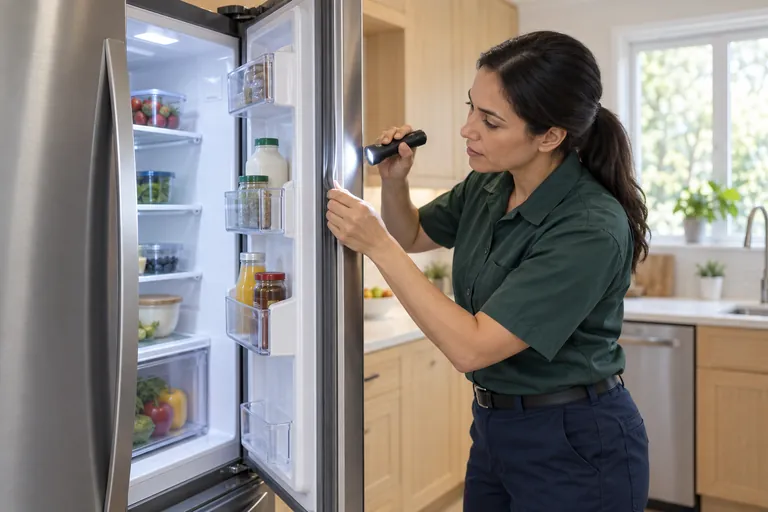
Quick Answer: Refrigerator freezing food in Edmonton? The most common causes are a failed thermistor (temperature sensor), stuck-open damper control, or incorrect temperature settings. This is the opposite of the typical "fridge not cooling" fault but requires the same professional diagnosis. Fixlify Edmonton books on-site appointments across Edmonton, Sherwood Park, and St. Albert. Book online or email edmonton@fixlifyservices.com.
Why Is My Fridge Freezing Food? Understanding the Temperature Control System
A refrigerator that freezes food is frustrating and wastes money on ruined groceries. Leafy vegetables, yogurt, eggs, and soft cheese are particularly vulnerable to partial freezing damage. Understanding why this happens requires a quick overview of how a refrigerator controls temperature.
The fresh food compartment is cooled by cold air drawn from the freezer section through a damper (air damper or damper control). The damper is a motorized door that opens and closes based on signals from the thermistor (temperature sensor) and the main control board. When the system works correctly, the damper opens to let cold air in when the compartment is warm, then closes when the target temperature (3°C–4°C) is reached. When any component in this feedback loop fails, the compartment can either not cool enough (warm fridge) or cool excessively (frozen food).
Edmonton homes in colder areas of the city — particularly those with east or north-facing kitchen walls in older neighbourhoods like Parkdale and Calder — sometimes experience seasonal temperature shifts that stress the refrigerator's temperature control during extreme cold snaps, making marginal thermistor or damper faults more visible in winter.
Common Causes of a Fridge Freezing Food in Edmonton
Cause 1: Temperature Set Too Cold
This is the simplest explanation and always worth checking first. The fresh food compartment should be set to 3°C (37°F) for best food safety and lowest freezing risk. Many Edmonton homeowners set the fridge colder in summer to compensate for frequent door opening during hot weather, then forget to adjust back when temperatures drop. Check the digital display or dial settings before assuming a component fault. Adjust to 3°C and monitor for 24 hours.
Cause 2: Failed Thermistor (Temperature Sensor)
The thermistor reads the compartment temperature and sends readings to the control board. A thermistor that has drifted toward reporting too-warm temperatures causes the control board to keep the damper open longer than needed, flooding the compartment with freezer air. On LG French-door refrigerators (extremely popular in Edmonton's newer communities like Windermere and Keswick), thermistor failures are one of the most common diagnostic findings. LG models sometimes display error codes related to sensor faults. Thermistor replacement: $90–$130.
Cause 3: Stuck-Open Air Damper
The air damper between the freezer and fresh food compartments is a plastic flap controlled by a small motor or bimetal strip. If the damper sticks in the open position (typically due to ice buildup around the damper motor housing or a failed damper actuator), cold air flows continuously into the fresh food compartment. You can often confirm this by placing your hand near the back wall of the fresh food compartment — continuous cold airflow from the damper vent when the compressor is running confirms the damper is stuck open. Air damper assembly replacement: $80–$140.
Cause 4: Control Board Fault
The main control board manages all refrigerator functions including damper operation, compressor cycling, and defrost scheduling. A control board that develops a fault in the temperature management circuit can fail to close the damper at the correct temperature. Control board replacement is more expensive ($150–$280) and is typically the last thing diagnosed after ruling out sensors and mechanical damper components. On Samsung four-door refrigerators, control board faults sometimes manifest as one zone (typically the bottom drawer) running several degrees colder than setpoint.
Cause 5: Faulty Door Seals (Cold Air Bleed-Back)
A damaged or poorly sealing fresh food door gasket in Edmonton's dry winter air can allow cold kitchen air to enter the compartment and supercool items near the door. Edmonton's indoor relative humidity in winter drops to 20–30%, drying out door gasket rubber quickly in poorly maintained fridges. Items stored in door bins — condiments, eggs, soft drinks — are most vulnerable. Replace door gaskets that show cracking, stiffness, or gaps. Gasket replacement: $80–$140.
Cause 6: Incorrect Food Placement
The coldest zone in a refrigerator is typically the back wall at shelf level closest to the evaporator damper. Placing temperature-sensitive items (leafy greens, herbs, yogurt) directly against the back wall of the fresh food compartment can cause localized freezing even when the overall compartment temperature is set correctly. Rearrange food to maintain a 5–8 cm gap between items and the back wall.
Edmonton Fridge Freezing Food Repair Cost Guide
| Cause | Estimated Repair |
|---|---|
| Temperature setting adjustment | Free (DIY) |
| Food placement correction | Free (DIY) |
| Thermistor replacement | $90–$130 |
| Air damper assembly | $80–$140 |
| Door gasket replacement | $80–$140 |
| Main control board | $150–$280 |
How Edmonton’s Winter Affects This Problem
Edmonton's extremely dry winter air (humidity as low as 15% in January) causes rubber door gaskets to harden and shrink faster than in humid climates. A gasket that sealed perfectly in August may leak cold air in January. Additionally, the kitchen-to-hallway temperature gradient in older Edmonton homes — where the kitchen is at +20°C while adjacent laundry areas or garages are much colder — can create micro-drafts near the refrigerator that affect sensor readings. If your fridge started freezing food at the beginning of winter, a gasket inspection and temperature sensor check are the logical first steps.
Fridge Freezing Food in Edmonton? Book a Diagnosis Online
On-site appointments across Edmonton, Sherwood Park, St. Albert, Spruce Grove, and surrounding communities. Written estimate before any work begins.