On-site service is available by appointment; submit a booking request so the team can confirm current availability.
TL;DR: No water from dispenser = check filter age first, then test water inlet valve solenoid (200–500 ohm normal), door switch continuity, and supply tube for freezing. Slow water = filter clogged or low line pressure. Repair cost typically $95–$200 CAD. Fixlify gives a digital quote after diagnosis.
What Components Make Up the Fridge Water Dispenser System?
A refrigerator water dispenser system has five interdependent components. Understanding each one helps explain why a failure in any single part stops water flow entirely:
- Household water supply line — typically a 1/4-inch copper or plastic tube connecting to the refrigerator from the wall shutoff valve. Minimum operating pressure: 20 PSI.
- Water inlet valve — an electrically-operated solenoid valve at the rear of the fridge. Energized (opened) by 120 V AC when the dispenser paddle is pressed.
- Water supply tube through door — a thin tube running through the door hinge area. This section is prone to freezing in French-door and side-by-side models where ambient air infiltrates the hinge channel.
- Dispenser door switch — a microswitch inside the door dispenser actuator that signals the control board when the paddle is depressed.
- Dispenser control board — interprets the door switch signal and activates the water inlet valve solenoid. On modern LG and Samsung models, this is integrated with the main display board.
Why Is There No Water From the Dispenser?
When the dispenser produces zero water and the ice maker is also not making ice, the fault is almost always the water inlet valve or supply line pressure. When only the dispenser is non-functional but ice maker still produces ice, the second dispenser solenoid in the inlet valve (most valves have a dual-solenoid design — one for ice, one for water) has failed, or the door switch circuit is open. Our technician David K. confirms which solenoid is at fault by testing each independently with 120 V applied directly — a functioning solenoid will open immediately; a failed one will not, and will show an open-circuit reading on the multimeter.
The Frozen Supply Tube Problem
In Toronto winters, frozen supply tubes inside the fridge door are a common and frequently misdiagnosed fault. The plastic supply tube passes through the door hinge area, and if the door gasket is worn or the hinge seal has cracked, freezer-temperature air circulates around the tube until a section freezes solid. The symptom is a dispenser that works intermittently — fine in warm weather, blocked when temperatures drop — or works for the first few seconds then stops as a partially frozen section re-ices.
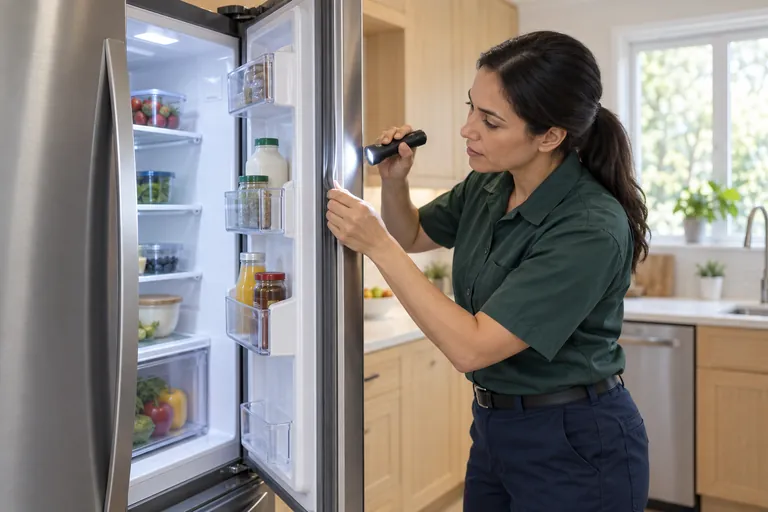
Our diagnostic approach uses an infrared thermometer to identify temperature anomalies along the door tube routing. A frozen section shows 10–15°C colder than adjacent door areas. The fix involves careful thawing, rerouting the tube away from the cold zone, and resealing the hinge area with foam tape.
Do not use a heat gun or open flame to thaw a frozen water supply tube. Plastic tubing can melt or warp, and the resulting leak can damage the floor and door panel. A technician uses low-temperature methods — warm cloth wraps and controlled heat — to thaw the line safely without warping the tube or door inner liner.
Water Dispenser Diagnosis — Step by Step
Water Filter and Supply Pressure Check
Technician confirms filter age and condition. Supply line pressure is measured at the inlet valve — minimum 20 PSI required. Low pressure from a clogged filter or partially closed shutoff valve is ruled out before electrical testing begins.
Door Switch Continuity Test
Multimeter tests dispenser paddle switch for continuity when actuated. Switch should show closed circuit (0 ohms) when paddle is pressed, open circuit when released. Stuck or failed switches are replaced — they are inexpensive at $25–$45.
Water Inlet Valve Solenoid Resistance Test
Solenoid resistance tested with multimeter. Normal range 200–500 ohms. Open circuit = failed coil. Near-zero resistance = shorted coil. Either condition confirms valve replacement required.
Supply Tube Infrared Temperature Scan
IR thermometer scanned along the door tube path. Sections more than 8°C colder than adjacent areas indicate partial or full freeze. Tube is thawed and hinge seal integrity is evaluated.
Repair Costs for Refrigerator Water Dispenser Problems in Toronto
- Water inlet valve replacement: $140–$200 CAD (parts + labour)
- Frozen supply tube thaw + seal repair: $95–$140 CAD
- Dispenser door switch replacement: $80–$120 CAD
- Water filter replacement (supplied + installed): $55–$90 CAD
- Dispenser control board replacement: $180–$280 CAD
Fixlify has served Toronto homeowners since 2017. Our technicians carry common inlet valves for LG, Samsung, Whirlpool, GE, and Frigidaire refrigerators. Most water dispenser repairs are completed in a single visit with a digital upfront quote provided after the first diagnostic step.
Fridge Dispenser Not Working in Toronto?
On-site service is available by appointment; submit a booking request so the team can confirm current availability.
Book Dispenser Repair