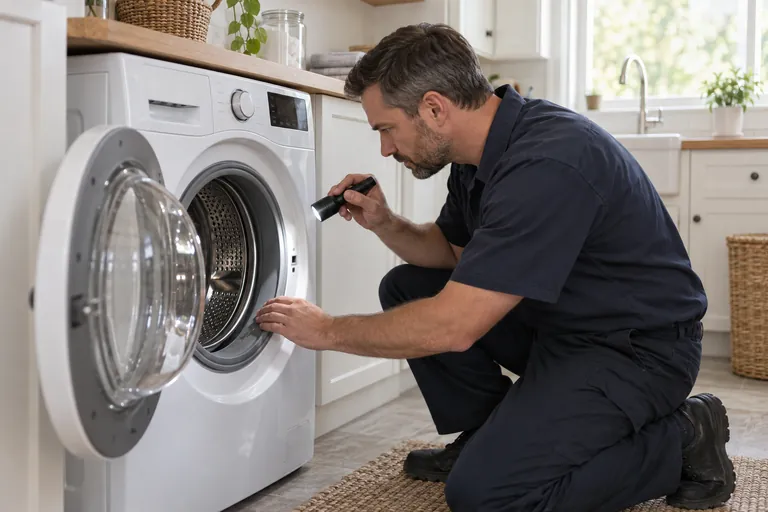
Fixlify Appliance Services has sourced, tested, and installed parts for every major appliance brand in Toronto since 2017. Our technicians install over 1,200 parts annually across LG, Samsung, Whirlpool, Bosch, Frigidaire, GE, Kenmore, and Miele appliances — which gives us a data-driven perspective on when OEM parts justify the premium and when quality aftermarket parts deliver equal value. Call (437) 524-1053 for expert repair using the right parts for your appliance.
TL;DR: OEM = always correct spec, manufacturer warranty, higher cost (30–60% more). Aftermarket = lower cost, variable quality. Use OEM for: control boards, motor stators, inlet valves, inverter modules. Aftermarket acceptable for: door gaskets, belts, dryer igniters (basic type), knobs, racks. Fixlify always specifies which part type is used in the digital quote.
What Is the Actual Difference Between OEM and Aftermarket Parts?
OEM (Original Equipment Manufacturer) parts are identical to the components installed at the factory. They are made by the same supplier that manufactured the original part, or by the appliance brand's in-house production. When you order a Bosch drain pump with part number 00145038, you receive exactly the same component Bosch installs on the production line.
Aftermarket parts are manufactured by independent companies using the OEM part's published specifications as a reference — but without access to the original tooling, material specs, or manufacturing quality controls. The result varies enormously: some aftermarket manufacturers (Supco, Exact Replacements, OEM equivalent) produce parts that are functionally indistinguishable from OEM. Others produce parts with incorrect dimensions, different electrical tolerances, or substandard materials that fail prematurely.
The problem is that the quality of an aftermarket part is not visible from the outside. Two drain pumps may look identical but use different impeller materials, motor coil windings, or bearing grades — differences that only emerge after 6–18 months of operation.
When Fixlify Specifies OEM Parts
Based on nine years of repair data, our technicians always specify OEM for the following component categories:
- Electronic control boards — aftermarket boards frequently use lower-grade capacitors and relay contacts that fail within 12–18 months. OEM boards carry manufacturer warranties of 90 days to 12 months.
- Water inlet valves — solenoid coil winding tolerance is critical. Aftermarket valves may draw incorrect current, causing control board relay overloading over time.
- Inverter motor stators (LG, Samsung) — winding resistance and insulation class must be exact. An incorrect stator damages the inverter board within months.
- Refrigerator compressors and sealed system components — must meet the refrigerant and lubrication specifications of the original design.
- Bosch and Miele drain pumps — the European BSH pump design has tight housing tolerances; aftermarket pumps frequently develop seal leaks at the housing joint.
When Quality Aftermarket Parts Are Acceptable
For lower-precision mechanical components where dimensional tolerances are wide, reputable aftermarket parts deliver equivalent performance at meaningful cost savings:
- Dryer drum belts — generic belts meeting the original dimensions (width, length, rib count) perform identically to OEM. Savings: $15–$25 per belt.
- Door gaskets (refrigerator and dishwasher) — aftermarket gaskets from quality suppliers match the profile adequately. The gasket material (EPDM rubber) is standardized.
- Dryer drum rollers — aftermarket rollers with the correct shaft diameter and roller compound work well. Savings: $20–$40 per roller set.
- Basic dryer igniters (gas range) — commodity ceramic-tip igniters with correct resistance range perform well in most applications.
- Thermal fuses and basic thermostats — standard electrical components with published specifications; reputable aftermarket versions meet the spec reliably.
Counterfeit "OEM" parts are a real problem in the Toronto appliance parts market. Parts sold on Amazon Marketplace, Kijiji, and low-cost e-commerce sites are sometimes labeled as OEM but are actually low-grade aftermarket components in OEM-style packaging. Our technicians verify part authenticity through authorized Canadian distributor channels — Reliable Parts, Encompass Parts, and manufacturer direct portals. If a part is priced 40%+ below normal OEM retail, it is likely counterfeit.
How to Find the Right Part Number for Your Appliance
Locate the Model and Serial Number
Every appliance has a model label: inside the refrigerator door frame, inside the washer door opening, on the back or bottom of dishwashers, and on the back panel of dryers. Note both model and serial number — the serial number identifies the production date and manufacturing batch, which is important for appliances with mid-run design changes.
Use Manufacturer Parts Diagrams
LG, Samsung, Whirlpool, Bosch, and GE all publish parts diagrams and part numbers on their service portals. Enter the model number to see an exploded parts diagram with every component's individual part number. This eliminates guesswork about part compatibility.
Verify Cross-Reference Numbers
Many components are shared across model lines and branded differently. For example, Kenmore models share Whirlpool parts — the Kenmore part number and Whirlpool WP part number reference the same physical component. Authorized parts suppliers provide cross-reference lookup to confirm compatibility.
Fixlify's Parts Policy
Every Fixlify repair invoice specifies the part used, the part number, and whether it is OEM or quality-equivalent aftermarket — so you have a clear record. For parts where we use quality aftermarket, we specify the manufacturer name. We do not use unknown-origin parts from unverified suppliers, and we do not substitute aftermarket for OEM on components where the engineering tolerance matters. Our digital quote shows part cost and labour cost separately before any work begins.
Need a Part for Your Appliance in Toronto?
On-site service is available by appointment; submit a booking request so the team can confirm current availability.
Book Appliance Repair