The job workflow in appliance repair — from the moment a customer calls to the moment a payment is collected and an invoice is sent — is where most of the operational friction in small repair businesses exists. Unclear quotes lead to billing disputes. Manual invoice writing introduces errors and delays. Paper job cards get lost. Payment collection at the door involves awkward cash handling. The good news: these problems are entirely solvable with the right workflow design and tools. Here is how the best appliance repair businesses structure this process end-to-end.
The 7-Stage Job Workflow: What It Looks Like When Done Right
Customer books online or calls. The booking captures appliance type, brand, problem description, and contact information — directly into the job management system. An automated confirmation is sent to the customer immediately, including the appointment window and the diagnostic fee amount.
The technician reviews the job details before leaving. They check parts inventory for the most likely faults based on the appliance and symptom description. If a specific part is frequently needed for the reported issue, it is loaded in the van before departure — improving first-visit fix rate.
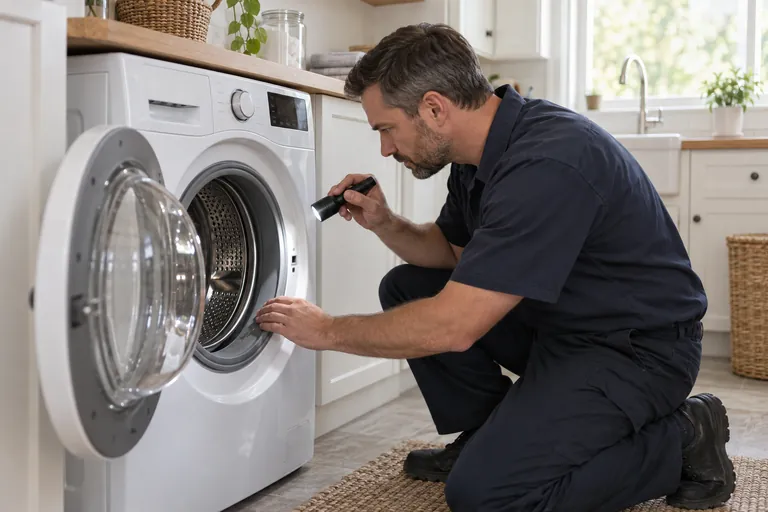
The system sends an arrival notification to the customer en route. On site, the technician opens the job on their field service app, which shows the customer details and job history. Diagnosis is performed, and the fault is documented with photos.
The technician generates the repair quote in the app: parts (with OEM part numbers and prices), labour, diagnostic fee credit, HST, and total. The customer reviews the quote on the technician's tablet and provides a digital signature approving the repair. This approval is timestamped and stored in the job record.
The repair is performed. The technician documents the parts installed (confirming part numbers match the quote), takes an after-repair photo, and logs any notes about the service performed. All documentation flows into the job record automatically.
The invoice is generated from the approved quote — not re-entered manually. Parts, labour, HST, and warranty terms are pulled from the job record. The customer pays via tap, credit card through the app, or e-transfer. Payment confirmation is immediate.
Within 30 minutes of payment, the system sends a thank-you email with the PDF invoice attached and a review request link. The job is marked complete in the dispatch queue. If a warranty follow-up is needed, it is scheduled automatically at the 90-day mark.
Where Manual Workflows Break Down
On-site service is available by appointment; submit a booking request so the team can confirm current availability.
Each failure point creates downstream problems: billing disputes, missing payment records, uncollected accounts, customer confusion about warranty terms, and administrative time that should be spent on serving the next customer.
The Financial Impact of a Streamlined Workflow
On-site service is available by appointment; submit a booking request so the team can confirm current availability.
The reduction in billing disputes also has direct financial value. A disputed invoice requires the business owner's time to resolve, often results in a discount to close the dispute, and generates a negative review if handled poorly. Integrated quote-to-invoice workflows eliminate the ambiguity that creates disputes in the first place.
Parts Inventory: The Hidden Workflow Benefit
An often-overlooked advantage of integrated job management is automatic inventory tracking. When a technician logs a part used in the field service app, that part is decremented from the van inventory count. The business owner can see at any time which parts are running low across the fleet and place orders proactively — before a technician arrives at a job and discovers the part they need is not in the van.
The business case is straightforward: A well-structured quote-to-invoice workflow reduces errors, accelerates cash collection, eliminates billing disputes, improves first-visit fix rates through parts visibility, and generates professional documentation that builds customer trust. For appliance repair businesses, this is not a luxury feature — it is the operational foundation that separates scalable businesses from those that plateau at 3–4 technicians.
Run Every Job Smoothly with Fixlify
Integrated booking, quoting, invoicing, and payment collection — the complete appliance repair job workflow in a single platform. Start free, no credit card required.